
Why Stress is Much More Important than Cholesterol or LDL
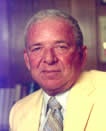 By Paul J. Rosch, M.D., M.A., F.A.C.P.
Cholesterol is a large inert molecule and it is difficult to see how it could cause the inflammation that precedes the deposition of lipids in artery walls. In addition, myocardial necrosis due to secretion of norepinephrine at myocardial nerve endings can occur without significant coronary obstruction in laboratory animals and humans following severe stress.
This produces a characteristic "contraction band" necrosis that differs from most myocardial infarctions because of the absence of significant white cell infiltration. Conversely, it is not unusual to find extensive and even obstructive coronary atherosclerosis in elderly patients who have never had any symptoms or signs of heart disease, and died following an accident or from some other cardiac unrelated cause.
The prevailing lipid hypothesis was based on feeding fat to herbivorous animals in experiments that do not apply to humans. This erroneous dogma has been perpetuated by the powerful cholesterol cartel of manufacturers of cholesterol lowering drugs, low fat foods, lipid testing equipment and others who are motivated by increasing their enormous profits, rather than improving health or preventing disease.
There is no evidence that a high saturated fat diet causes a significant increase in cholesterol or contributes to coronary atherosclerosis in any other way. Epidemiology studies show that increased fat consumption is actually associated with lower coronary morbidity and mortality. No dietary cholesterol lowering trial has ever shown a reduction in lowering coronary disease or deaths.
High cholesterol is not associated with increased risk for heart attacks or other coronary events in people older than 65, or women of any age. Senior citizens with high cholesterols actually have significantly fewer infections and live longer than those with low cholesterol. In addition, no association between cholesterol levels and the severity or extent of atherosclerosis has ever been found in routine autopsy studies.
In contrast, the causal relationship between acute stress, depression, anxiety, Type A behavior and coronary disease has been well documented.
Unlike the saturated fat -> high cholesterol hypothesis, many of the varied pathophysiologic mechanisms of action responsible for these relationships have been elucidated, including: constriction of coronary vessels, increased platelet stickiness and clumping that promote clot formation, increased CRP ( c-reactive protein ), homocysteine and fibrinogen, increased deep abdominal fat deposits and cytokines that promote insulin resistance, and metabolic syndrome with its dangerous cardiovascular consequences.
There is also growing evidence that atherosclerosis is a response to inflammation that is initiated by infections. It is well established that stress related hormones like cortisol can significantly reduce resistance to infection.
With respect to stressful life events, one has only to look at the startling statistics showing that senior citizens have a 20 percent chance of dying, usually from a heart attack, in the 12-18 months after the loss of a spouse.
During the month following the 9/11/2001 terrorist attacks on the World Trade Center in New York, the rate of defibrillator firings was two to three times normal even in patients living far from the catastrophe.
In one study of work-related stressors, upcoming deadlines were associated with a six fold increase in myocardial infarction, and other studies suggest that chronic work-related stress could carry a two to three times higher risk of cardiac events, especially when employees perceive little control over their work environment.
In women with established coronary disease, marital stress was associated with a risk of recurrent events three times higher than in controls with no marital stress. Caring for a sick spouse at home nearly doubled death rates from coronary events.
There is also stress cardiomyopathy or "Broken Heart Syndrome" in which middle-aged or older individuals are admitted with severe chest pain and ECG changes suggestive of an impending massive infarction but who have no angiographic abnormalities or enzyme changes indicating muscle damage.
This usually follows some acutely stressful event that results in myocardial "stunning" from increased stress hormones, and most patients recover spontaneously within 72 hours. In regard to anger, the greatest risk is for those who can't "get it off their chest", and literally as well as figuratively, "take it to heart".
"To measure is to know", and in that regard, cholesterol and LDL levels are much easier to measure than stress. However, statistics can readily be manipulated. In contrast to cholesterol, stress is difficult to define, much less measure, so that research demonstrating how it can contribute to heart disease is apt to be much less convincing than company sponsored statin study statistics.
Nevertheless, it would be wise to remember Albert Einstein's advice that "Not everything that can be counted counts, and not everything that counts can be counted."
Excerpted, with permission, from: Health and Stress, The Newsletter of The American Institute of Stress. ( www.stress.org )
Paul J. Rosch, M.D., M.A., F.A.C.P.
President of The American Institute of Stress,
Clinical Professor of Medicine and Psychiatry at New York Medical College,
Honorary Vice President of the International Stress Management Association and Chairman of its U.S. branch.
Update
Since the above was first written in August 2010, additional evidence has accumulated to support the assertion that heart attacks are not due to elevated cholesterol or LDL, and that these are merely risk markers because of a statistical association rather than risk factors that have a causal relationship.
In addition, the important role of stress has been increasingly confirmed.
Abundant updated support for both of these claims can be found in numerous chapters in a recent book that I edited entitled Fat and Cholesterol Don't Cause Heart Attacks And Statins Are Not The Solution, especially:
Monteiro C. "Stress as a cause of atherosclerosis" – (The Acidity Theory)
Kendrick M. "Cardiovascular disease is primarily due to blood clotting" – (discussion of the effects of stress on clotting and nitric oxide by the author of The Cholesterol Con)
Okuyama H. Langsjoen PS et al. "Industrial Control of Guidelines for Lipid Nutrition" – (update of previous article by this group showing that lowering cholesterol with statins stimulates atherosclerosis and heart failure)
Harcombe Z. "How Dietary Guidelines, Bad Science, Politics And Profit Have Contributed To The Current Epidemic of Obesity and Incidence of Heart –Disease" – (incontrovertible proof that there was never any scientific basis for recommendations to sharply restrict dietary fat)
de Lorgeril M, Rabaeus M. "Critical Review Of Recent Drug Company Sponsored Trials About Statin Efficacy And Safety" – (one of several chapters explaining how drug company sponsored trials hype efficacy and minimize or ignore adverse side effects)
Graveline D, Rosch PJ. "Why Reported Statin Side Effects Are Just The Tip Of A Titanic Iceberg"
Updated October 2016


© This article is copyrighted and may not be reproduced in any form without written permission from spacedoc.com
Statements on this site are those of the credited author of the article or message and the expressed opinions are not necessarily those of the site owners, operators, developers, or hosts.
Articles and messages on this site are for information and education purposes only and should not be used to diagnose or treat any illness, disease, or other medical condition.
Recommendations, statements and other opinions expressed on this site have not been evaluated by the U.S. Food and Drug Administration. Products, including vitamins, minerals and other dietary supplements, and any statements made about those products on this page and throughout this site have not been evaluated by the United States Food and Drug Administration and are not intended to diagnose, treat, cure or prevent disease.
Always consult with a qualified medical professional before making medication, diet, dietary supplement, exercise, or lifestyle changes or decisions.
Trademarks and service marks (including, without limitation, the individual names of products and companies) are the property of their respective owners.
Read the full Terms and Conditions, Privacy Policy and Disclaimers before using this site.
Contact
To contact site administrator regarding technical or other aspects of this site, e-mail to site@spacedoc.com
Note that no personal medical questions of any kind can or will be answered.
© 2008 - 2020 All material on this site http://www.spacedoc.com/ is copyrighted and may not be used or reproduced in any form without written permission
© 2008 - 2026 Spacedoc Media LLC Privacy Policy | Terms of Service | Sitemap